







In today’s competitive coffee industry, a great cup of coffee is no longer enough to attract and retain customers. The ambiance, design, and overall experience of a coffee shop are just as important as the quality of the beans. A well-designed café can create a memorable atmosphere, encourage repeat visits, and even become a social media hotspot.
Innovative coffee shop interiors blend functionality with aesthetics, reflecting both the brand’s personality and the local culture. This guide explores trends, inspirations, and design strategies that coffee shop owners and designers are using to make spaces not just visually appealing, but customer-centric.
1. The Power of Design in Coffee Culture
Coffee shops are more than retail spaces—they are cultural hubs where people socialize, work, relax, and create. The design of a café plays a key role in shaping the customer experience:
-
Atmosphere: Lighting, color schemes, and furniture influence mood and comfort.
-
Brand Identity: Interior design communicates the café’s story, values, and aesthetic.
-
Functionality: Efficient layouts improve service, customer flow, and staff productivity.
-
Engagement: Instagrammable spaces attract attention online, expanding brand reach.
When design aligns with functionality and brand vision, the coffee shop becomes a destination, not just a place to grab a drink.
2. Minimalist Designs: Clean Lines and Calm Spaces
Minimalism continues to dominate café interiors, emphasizing simplicity, functionality, and elegance.
Key Features:
-
Neutral color palettes with whites, grays, and natural tones.
-
Sleek, uncluttered furniture and open layouts.
-
Focus on quality materials, such as wood, steel, and stone.
-
Subtle lighting that enhances mood without being intrusive.
Why It Works:
Minimalist spaces create calm, inviting environments where the coffee and customer experience take center stage. They appeal to customers seeking a peaceful atmosphere for work, study, or casual conversation.
Example:
Café chains like Blue Bottle Coffee use minimalist interiors to showcase their high-quality coffee, letting the brewing ritual and the drinks themselves stand out.
3. Industrial Chic: Raw Aesthetics and Urban Edge
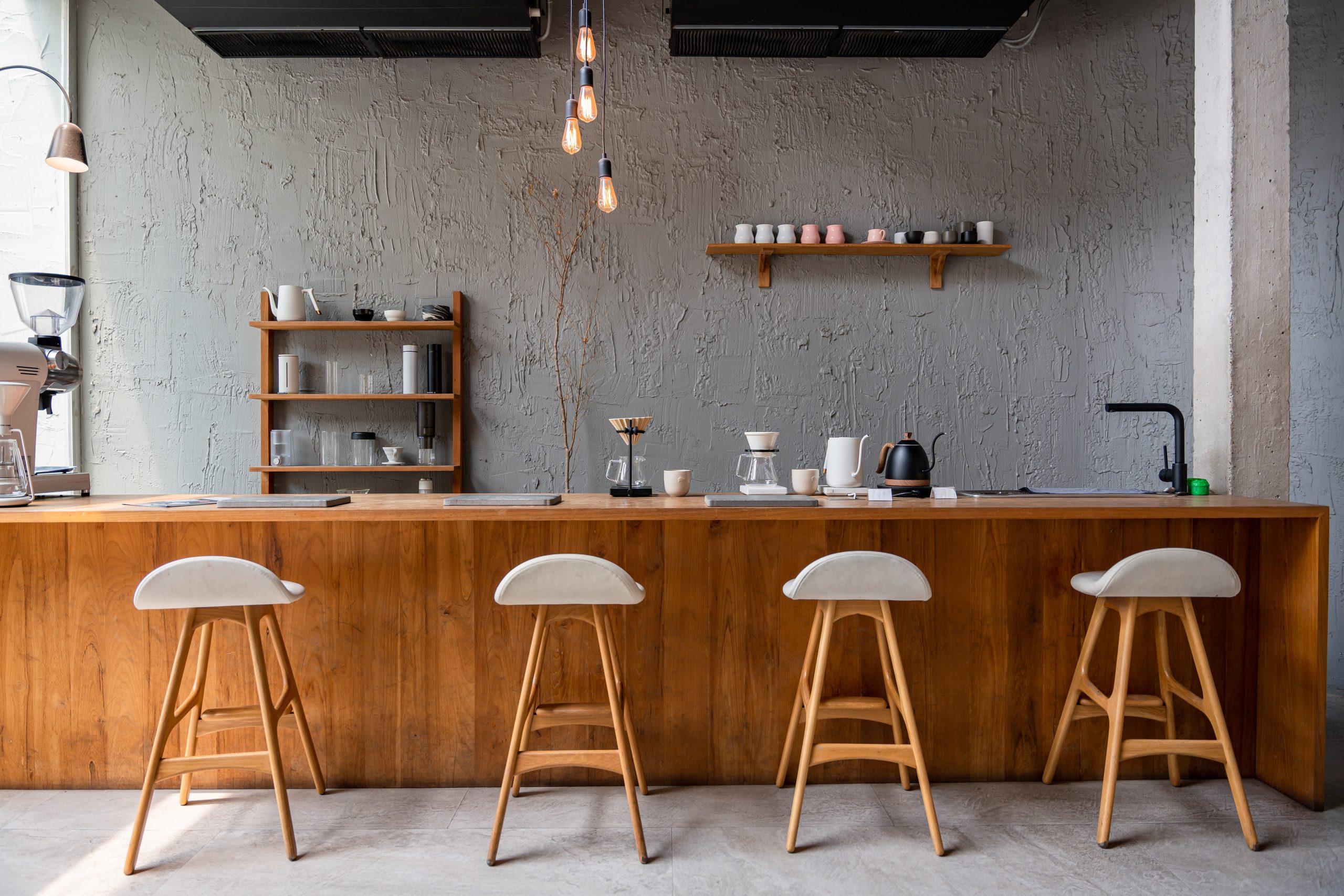
Industrial design is perfect for urban cafés looking to blend edgy aesthetics with practical layouts.
Key Features:
-
Exposed brick walls, steel beams, and concrete floors.
-
Open ceilings and visible ductwork.
-
Vintage or repurposed furniture and fixtures.
-
Edison bulb lighting for warmth and atmosphere.
Why It Works:
Industrial interiors offer a sense of authenticity and creativity, appealing to young, urban customers and creatives. They balance functionality with visual interest, creating a rugged yet inviting space.
Example:
Truth Coffee Roasting in Cape Town blends industrial interiors with steampunk design elements, attracting both coffee enthusiasts and tourists.
4. Biophilic Design: Bringing Nature Indoors
Biophilic design incorporates natural elements into the café environment, promoting relaxation and well-being.
Key Features:
-
Indoor plants, green walls, and vertical gardens.
-
Natural materials like wood, stone, and bamboo.
-
Large windows with natural light and outdoor views.
-
Water features or natural textures to create sensory richness.
Why It Works:
Customers feel more connected to nature, reducing stress and enhancing the coffee experience. Biophilic cafés also stand out visually on social media, increasing organic marketing opportunities.
Example:
Cafés like The Grounds of Alexandria in Sydney use lush greenery and garden-inspired décor to create an immersive, Instagram-worthy environment.
5. Vintage and Retro Styles: Nostalgia and Character
Nostalgia is a powerful tool in café design. Retro and vintage interiors create a sense of history, charm, and comfort.
Key Features:
-
Antique furniture, retro signage, and classic lighting fixtures.
-
Warm, muted color palettes with pops of vibrant color.
-
Curated décor that tells a story, such as vintage coffee grinders or artwork.
Why It Works:
Vintage-inspired cafés evoke emotion and memories, encouraging longer visits and repeat customers. They appeal to a sense of authenticity, attracting both locals and tourists.
Example:
Café Sant’Eustachio Il Caffè in Rome combines vintage charm with historic coffee-making techniques, offering both a cultural and sensory experience.
6. Community-Focused Spaces: Flexibility and Interaction
Modern coffee shops often function as community hubs, hosting events, meetings, and social gatherings. Design plays a crucial role in facilitating interaction and engagement.
Key Features:
-
Flexible seating arrangements: communal tables, cozy corners, and bar seating.
-
Open layouts for workshops, tastings, or live events.
-
Multi-functional spaces for coworking or study groups.
Why It Works:
Customers feel invited and connected, turning the café into a hub for social interaction and creativity. Flexible, community-focused spaces also allow for diversified revenue streams, such as workshops or pop-up events.
Example:
Melbourne cafés often incorporate communal tables, book corners, and event areas, creating spaces where both socializing and productivity coexist.
7. Tech-Integrated Designs: Convenience Meets Style
In the digital age, technology integration is key for modern cafés.
Key Features:
-
Power outlets and USB ports for laptops and devices.
-
Mobile ordering systems and digital menu boards.
-
Free Wi-Fi and comfortable workspaces.
-
Smart lighting and temperature control to enhance ambiance.
Why It Works:
Tech-savvy designs attract remote workers, digital nomads, and younger demographics who value connectivity. Integrating technology without compromising aesthetics ensures a seamless customer experience.
Example:
Cafés in tech-forward cities like Seoul and Tokyo blend sleek design with smart technology, catering to both locals and travelers seeking comfort and convenience.
8. Cultural and Thematic Interiors: Storytelling Through Design
Some cafés use design to tell a story or celebrate local culture, history, or art.
Key Features:
-
Local artwork, murals, or historical artifacts.
-
Themed décor based on literature, music, or cultural traditions.
-
Custom furniture and décor reflecting the brand’s narrative.
Why It Works:
Story-driven cafés create memorable experiences, differentiating themselves from generic chains. Customers feel immersed in a unique environment that stimulates conversation, curiosity, and loyalty.
Example:
Café Giang in Hanoi uses its design to highlight Vietnamese coffee traditions, offering customers both a visual and cultural journey.
9. Tips for Designing a Coffee Shop That Attracts Customers
-
Know Your Brand: Design should reflect your café’s identity and target audience.
-
Prioritize Comfort: Comfortable seating and proper lighting enhance dwell time and customer satisfaction.
-
Blend Functionality with Aesthetics: Efficient layouts improve workflow and customer flow without sacrificing visual appeal.
-
Incorporate Social Spaces: Community tables, event areas, and cozy corners encourage interaction.
-
Leverage Instagram-Worthy Elements: Visual focal points increase online engagement and organic marketing.
-
Adapt to Local Culture: Reflect local tastes, traditions, and architecture to connect with the community.
10. Conclusion
Innovative coffee shop interiors are about more than aesthetics—they shape experiences, define brands, and attract loyal customers. Whether it’s minimalist calm, industrial edge, biophilic serenity, vintage charm, or tech-integrated convenience, the right design strategy can transform a café into a destination.
By blending functionality, creativity, and customer-centric design, coffee shops can create memorable spaces that go beyond serving coffee. They become places for connection, culture, and inspiration.
For café owners, designers, and coffee enthusiasts, investing in innovative interior design is an essential part of building a thriving, experience-driven business. After all, people may come for the coffee, but they return for the atmosphere.